
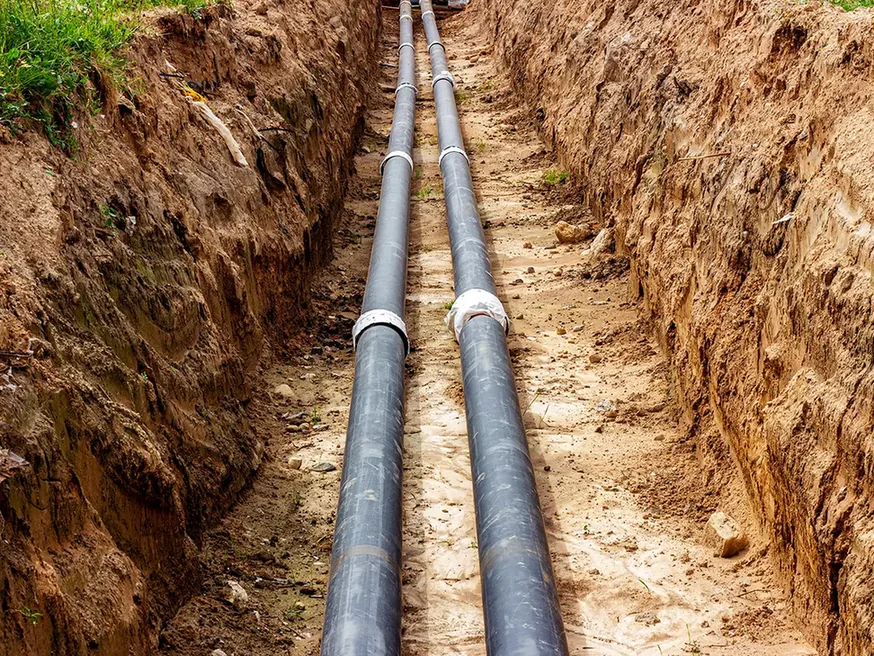
Storm Drainage
French drains, curtain drains, catch basins and culverts for building sites, subdivisions, farms and nurseries. We build each system on a steady fall to an outlet, to the engineer's plan where there is one.
Learn More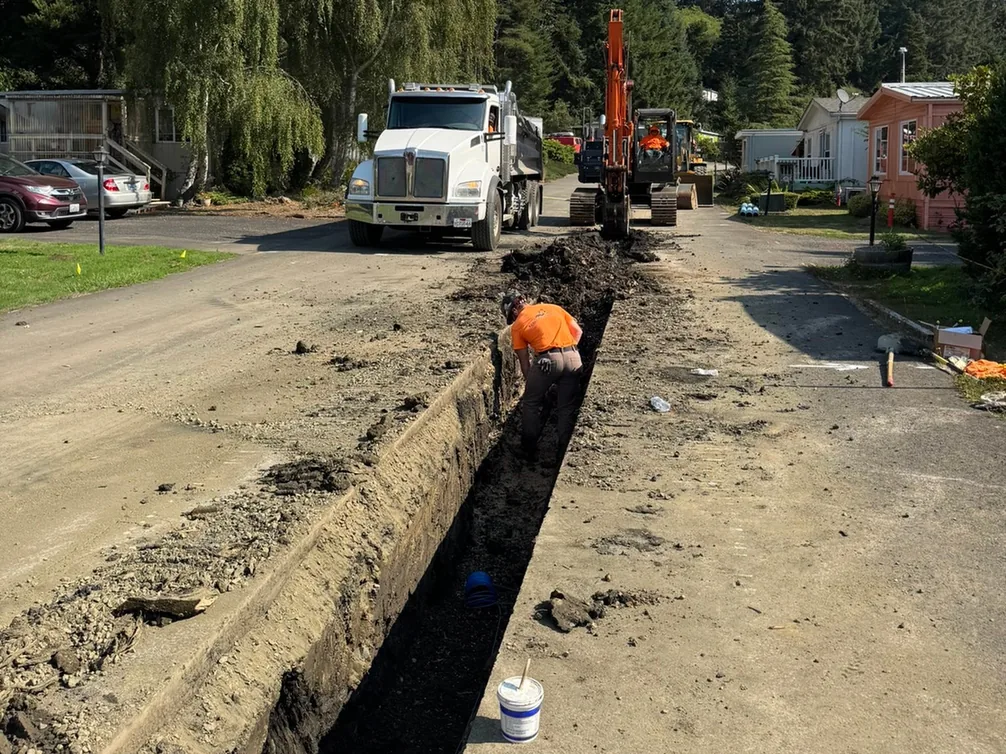
Turner Excavation provides trenching for builders, developers, farms, nurseries and business owners around Dallas, OR. Our excavators cut long runs for water lines, power and communications conduit and drain lines. Each trench goes to the depth and grade on the plans. We bed the line, then backfill in layers and compact each one.
Most of our trenching serves a bigger project. It is often part of the underground utility installation for a subdivision or a commercial site. It also brings water lines and conduit out to farm and nursery buildings on acreage. As an excavation contractor in Dallas, we work across Polk and Marion Counties and the wider Willamette Valley.
Tell us about the project and where the site is. We look at the job and put a free estimate in writing.
On farm and nursery ground, water lines and conduit often run a long way to the buildings. Our excavators open that trench along the route on the plans. Dump trucks bring in bedding material and haul away the extra spoil.
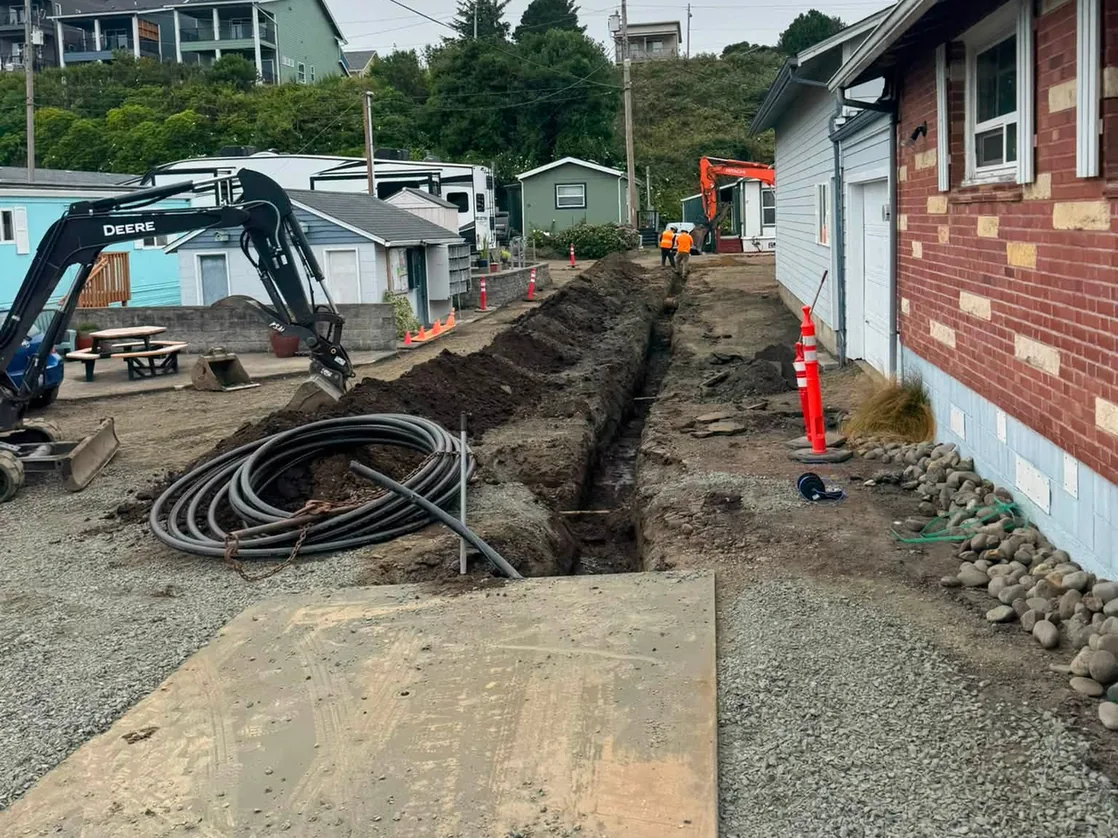
On a commercial site, trenching links the buildings to each other and to the utility lines at the street. The trench routes follow the engineer's site plan. Where several lines share a route, the plan sets the space between them.
For a new water service, the trench runs from the main to the meter. The water provider sets its own rules for that part of the line.
Oregon law calls for a locate request through Oregon 811 at least two full business days before digging. The request can go in no more than 10 business days ahead. We mark the planned trench route in white paint so the locators know where we will dig.
Each utility then marks its own lines in color. Red is power, orange is communications, blue is drinking water and green is sewer and drain lines. Within 24 inches of a mark, the rules call for hand digging or other non-invasive methods to find the line. A locate ticket now lasts 30 days, so a long job can outlast one ticket.
Federal and Oregon OSHA rules cover trench safety. Anyone in a trench 5 feet deep or more needs cave-in protection unless the cut is in stable rock. That can mean sloped walls or a trench shield. These rules shape the width of the dig and the pace of the work.
Poorly drained clay soils such as the Dayton series sit on terraces across the Willamette Valley. In the Dayton soils, the water table stays at its highest from November to April. A trench dug in those months can take on water, and wet clay is hard to compact.
Some winter jobs go ahead with imported rock for the backfill. Others wait for the dry months, the main build season in the valley. In summer the same clay dries hard, and our water truck keeps the dust down.
Drain line trenches need a steady fall so the water keeps moving. We dig them to the grade on the plan. Catch basins and culverts are part of our storm drainage and French drain work.
Call or text for a written quote. We work about 70 miles around Dallas across the Willamette Valley.
(503) 507-2919From the first call or text to the finished work, here is how it goes.
Call or text (503) 507-2919 and tell us about the land and the project. Plans or a site map help if you have them.
We come out to look at the ground and where the water goes. If there are plans, we go through the quantities with you.
The free estimate comes to you in writing, with the scope of work spelled out. Once you say yes, we set the start date together.
We call Oregon 811 for utility locates before any digging. Then the work goes in the order the job needs, from clearing through base rock.
We work with the city or county inspectors as the utilities go in. We leave the site graded and ready for the builders or the next trade.
Common questions about trenching around Dallas and the rest of the Willamette Valley. If yours is not here, call or text and ask.
French drains, curtain drains, catch basins and culverts for building sites, subdivisions, farms and nurseries. We build each system on a steady fall to an outlet, to the engineer's plan where there is one.
Learn More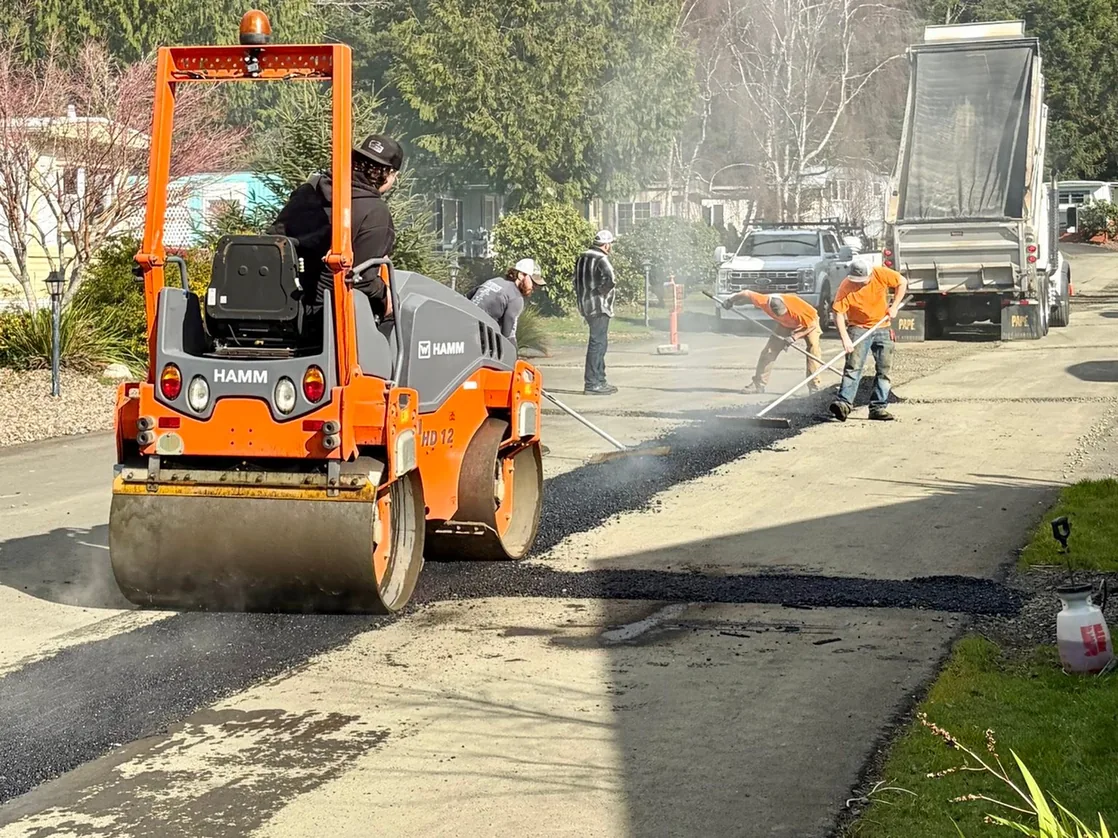
We build subdivision streets and private roads from the subgrade up, with the utilities under them laid first. Our concrete and paving subcontractors pour the curbs and lay the asphalt, under our management.
Learn More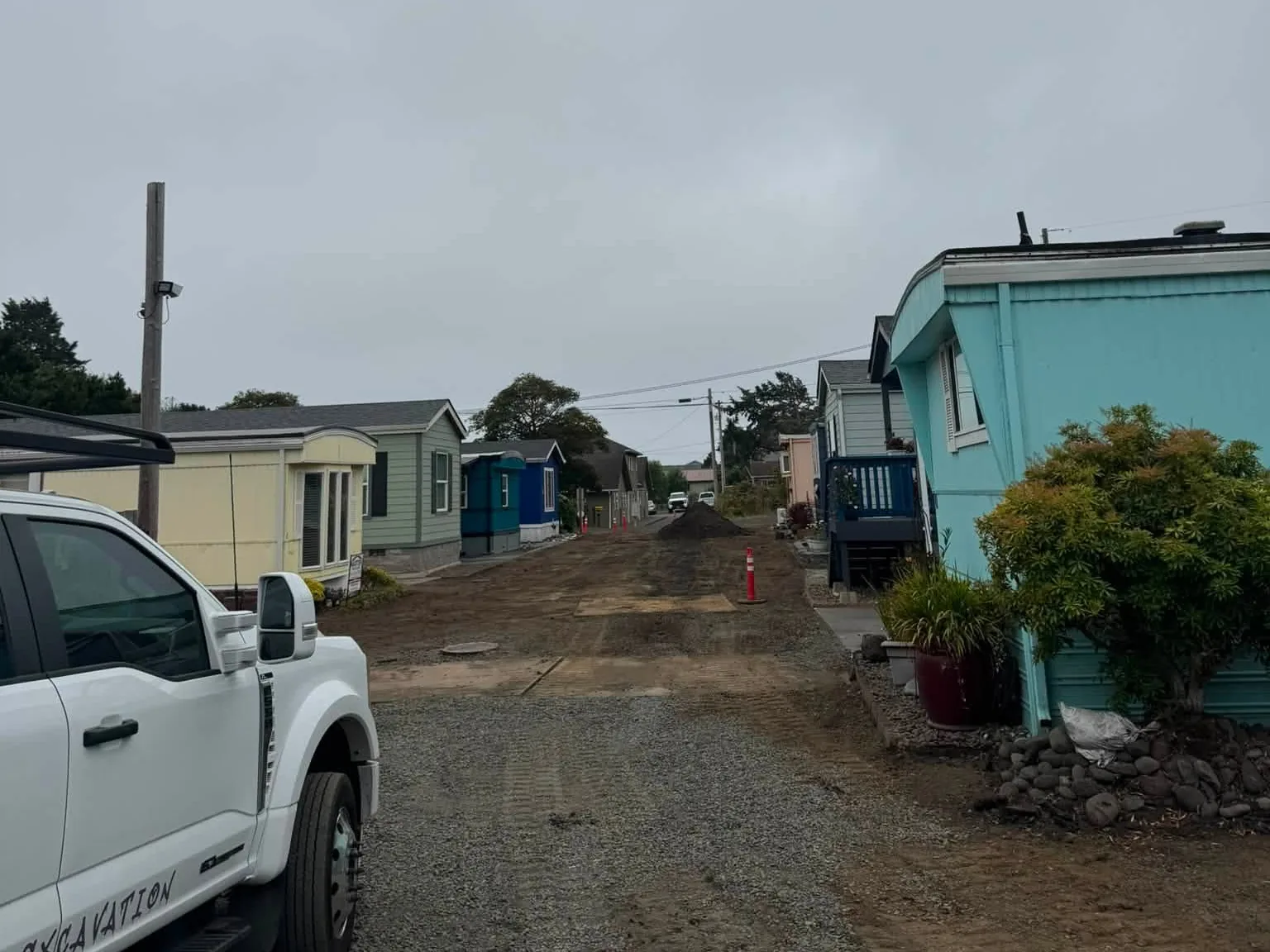
Long gravel driveways, farm and nursery access roads, equipment yards and construction entrances for builders and landowners. We grade the road and set the culverts, then build up the base rock to carry trucks.
Learn MoreWe put in the water, sewer, storm and dry utilities, then build the street over them. Our paving and concrete subcontractors finish the curbs and asphalt under our management.
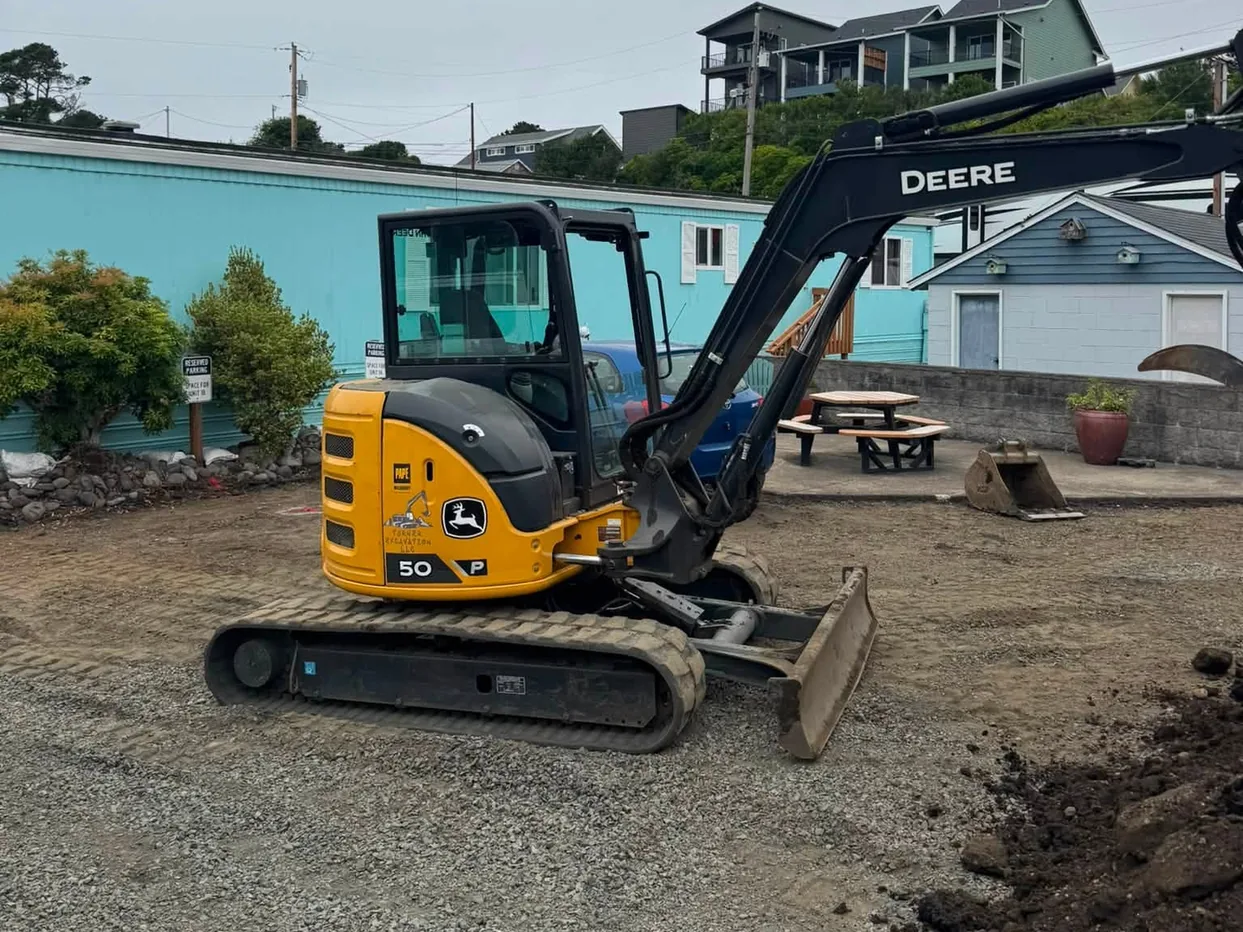
Our excavators, dozer, water truck and dump trucks do the heavy work. Our crew and foreman run the site from the first cut to final grade.
We look at the plans and the ground before we price the work. Then the free estimate comes to you in writing, with the scope spelled out.
Our shop and yard are in Dallas, in Polk County. We take on projects about 70 miles out, across the Willamette Valley and over the Coast Range to Newport.
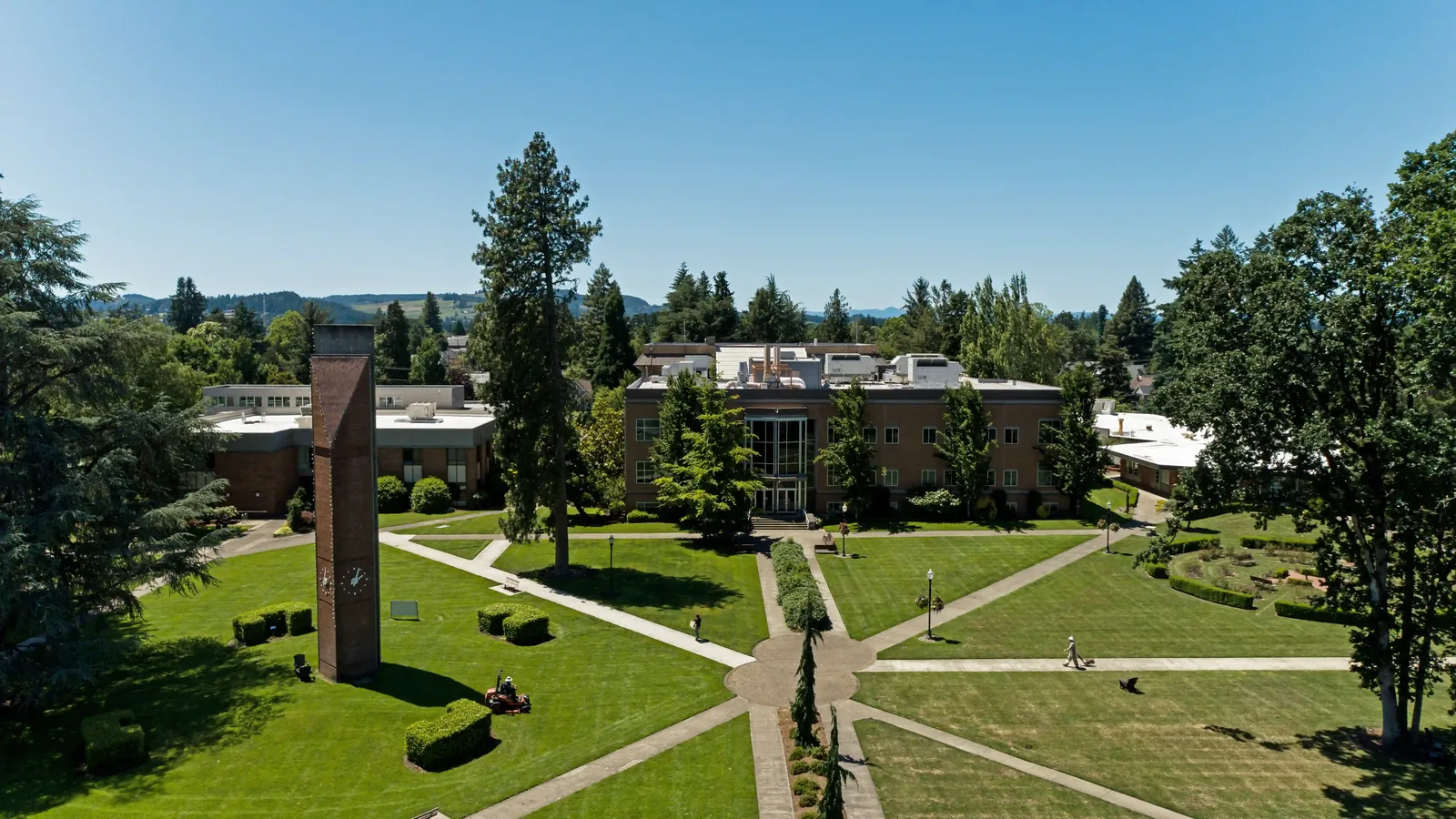
When does directional drilling beat an open trench in Oregon? Road and creek crossings, market costs per foot, the limits of each and restoration.
Read more →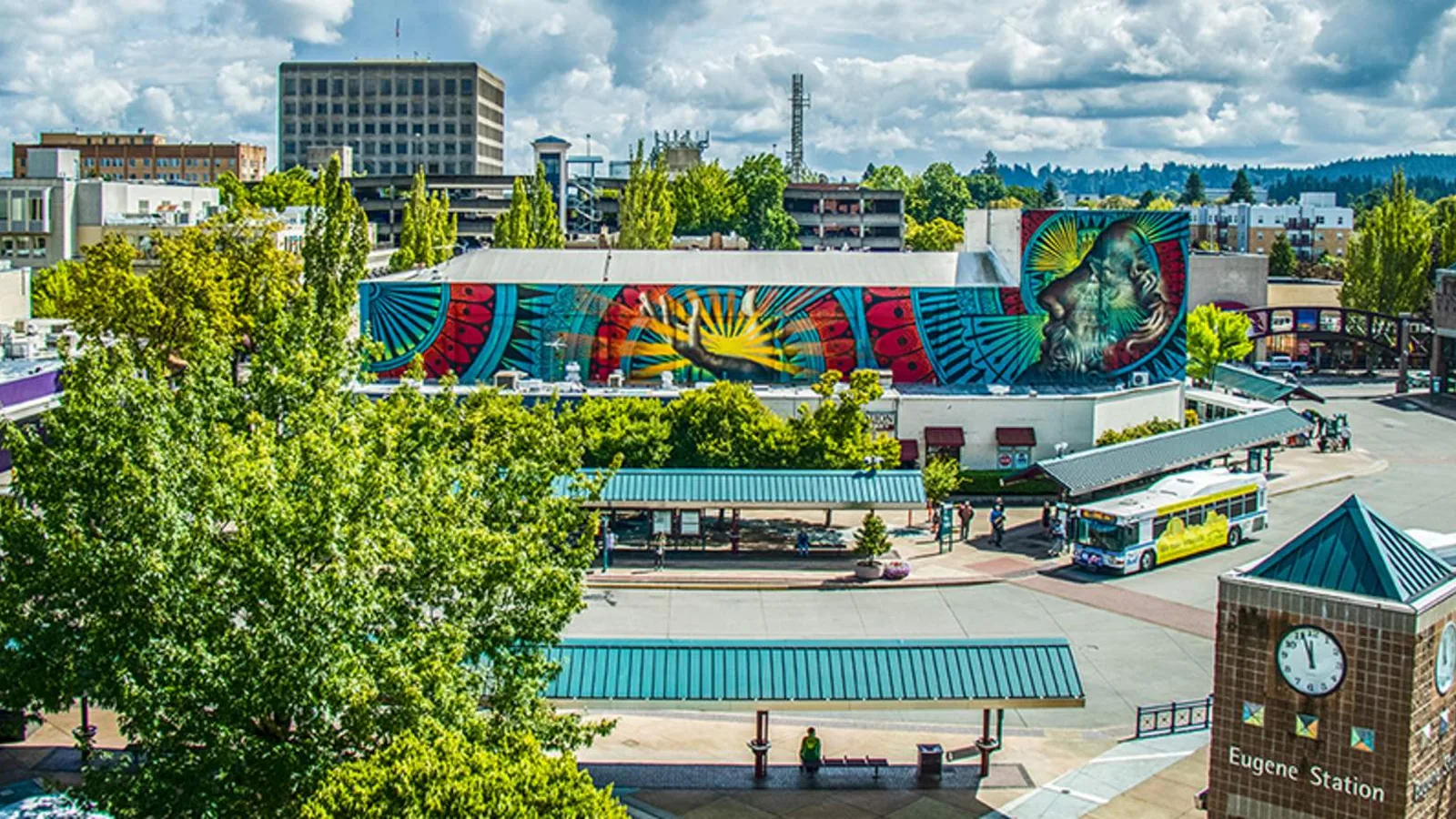
What underground utility installation costs in Oregon per foot, from national cost guides and Oregon city plans, and the factors that move the price.
Read more →Tell us where the land is and what the project needs, and send the plans if you have them. Call or text (503) 507-2919 or use the form, and we will set a time to look at the job.
Tell us about the project and where the site is. We look at the job and put a free estimate in writing.