Directional Drilling
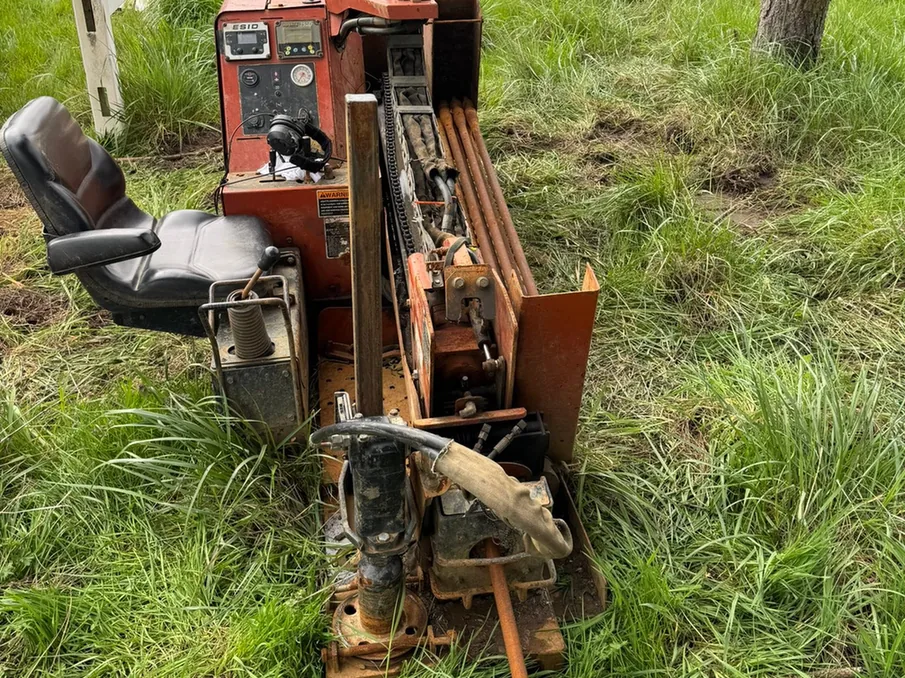
Directional drilling carries water services and power and communications conduit under roads, paved drives, parking lots and creeks. The pipe pulls back through the bore, and the surface above it stays in place.
Learn More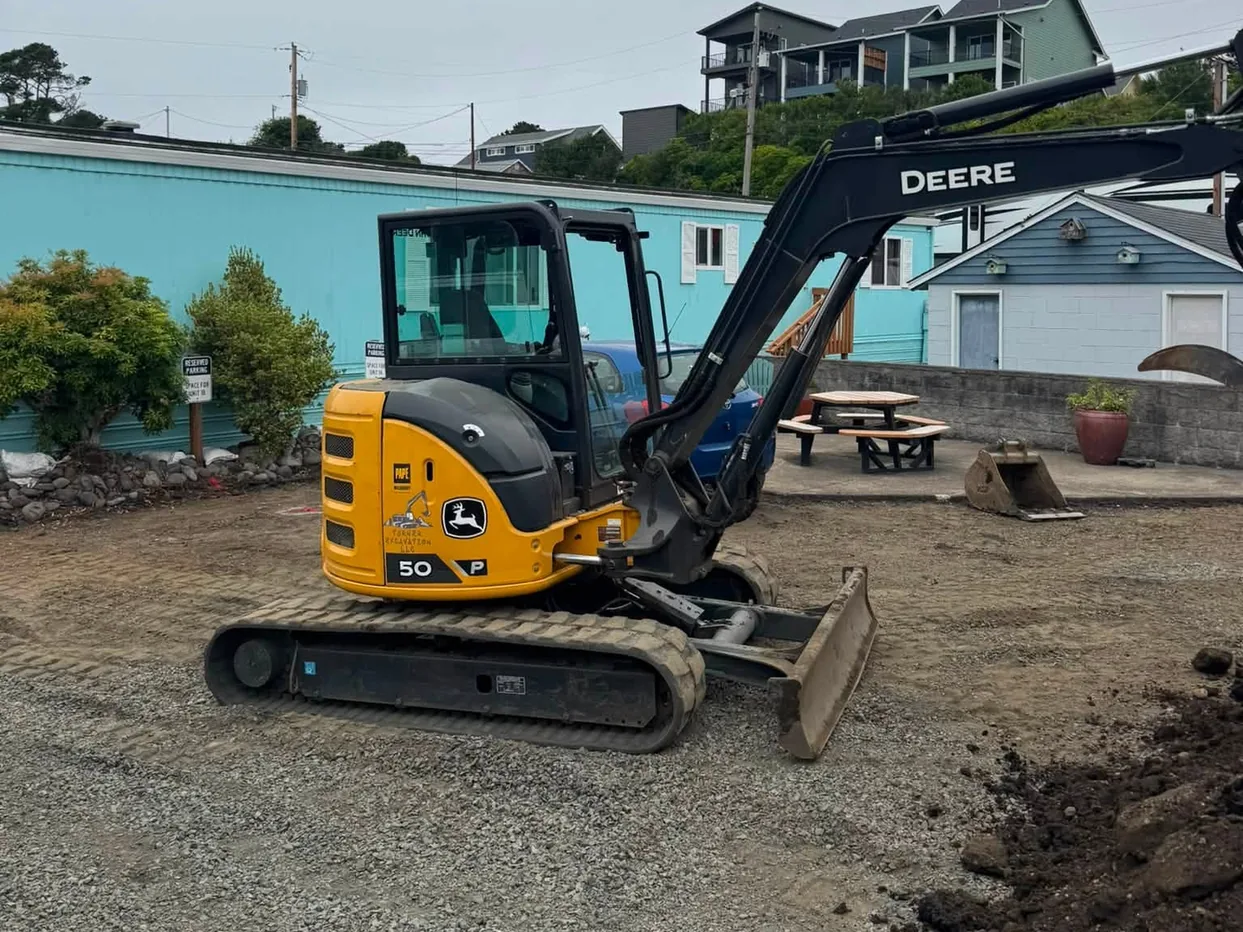
Foundation excavation is the dig for a building's footings, and a building pad is the compacted ground it stands on. Turner Excavation digs the footings and builds the pad for homes on acreage, shops, barns and commercial buildings. The lines and depths come from the engineer's plan, and we dig to them. It is one part of our work as an excavation contractor in Dallas, OR.
Builders and developers bring us in to get the ground ready before the concrete crew arrives. On a new home site on acreage, the pad often follows our site preparation and land clearing. From our yard in Dallas, we work across Polk and Marion Counties and the wider Willamette Valley. Call or text (503) 507-2919 for a free quote in writing.
Tell us about the project and where the site is. We look at the job and put a free estimate in writing.
First, the topsoil and roots come off the footprint, since buried organic material breaks down and settles. Then the ground is cut down or built up to the pad grade on the plan. On sloped ground, that means cut and fill grading across the building site.
Structural fill goes down in thin layers called lifts, and each lift is compacted before the next one. Marion County's residential footing checklist calls for structural fill compacted in lifts of 8 inches or less. Our water truck wets dry fill so it compacts to the density on the plan.
A finished pad sheds water, with its edges graded so rain runs away from the building. On wet ground, a French drain or a curtain drain around the pad carries the water off. For a crawl space, the county checklist also calls for a drain under the footing at the low point.
The engineer's plan sets the depth, and the building office checks the work. Marion County's checklist puts footing bottoms at least 12 inches below finished grade for frost protection. It also wants footings on undisturbed natural soil or engineered fill. That is why we cut footing trenches clean, down to firm ground.
Soil can change the plan. The same checklist says expansive, compressible, shifting or unknown soils require a geotechnical evaluation. On those sites, a geotechnical report shapes the footings and the fill, and we build to it.
Oregon OSHA requires cave-in protection for anyone working in an excavation five feet deep or deeper. On an open foundation dig, that can mean walls sloped back or cut in steps. So a deep hole ends up wider at the top than the building.
NRCS soil records list the Dayton series as extensive on terraces across the Willamette Valley. It is poorly drained, with a subsoil of 40 to 50 percent clay. Its water table sits high from November to April, and it can pond from December to April.
The valley's foothills carry different ground. Jory soils on the low foothills have a dark red clay subsoil. Nekia soils, also on the foothills, sit on bedrock 20 to 40 inches down. A deeper dig there can reach rock, and the engineer decides how the footings meet it.
Water and mud set the calendar. Marion County's checklist wants footings clear of mud, standing water, vegetation and roots before concrete goes in. On wet clay, the dry season is the easier window for a pad. In the wet months, a footing trench may need pumping, or the pour waits for drier ground.
Call or text for a written quote. We work about 70 miles around Dallas across the Willamette Valley.
(503) 507-2919From the first call or text to the finished work, here is how it goes.
Call or text (503) 507-2919 and tell us about the land and the project. Plans or a site map help if you have them.
We come out to look at the ground and where the water goes. If there are plans, we go through the quantities with you.
The free estimate comes to you in writing, with the scope of work spelled out. Once you say yes, we set the start date together.
We call Oregon 811 for utility locates before any digging. Then the work goes in the order the job needs, from clearing through base rock.
We work with the city or county inspectors as the utilities go in. We leave the site graded and ready for the builders or the next trade.
Common questions about foundation excavation around Dallas and the rest of the Willamette Valley. If yours is not here, call or text and ask.
Directional drilling carries water services and power and communications conduit under roads, paved drives, parking lots and creeks. The pipe pulls back through the bore, and the surface above it stays in place.
Learn More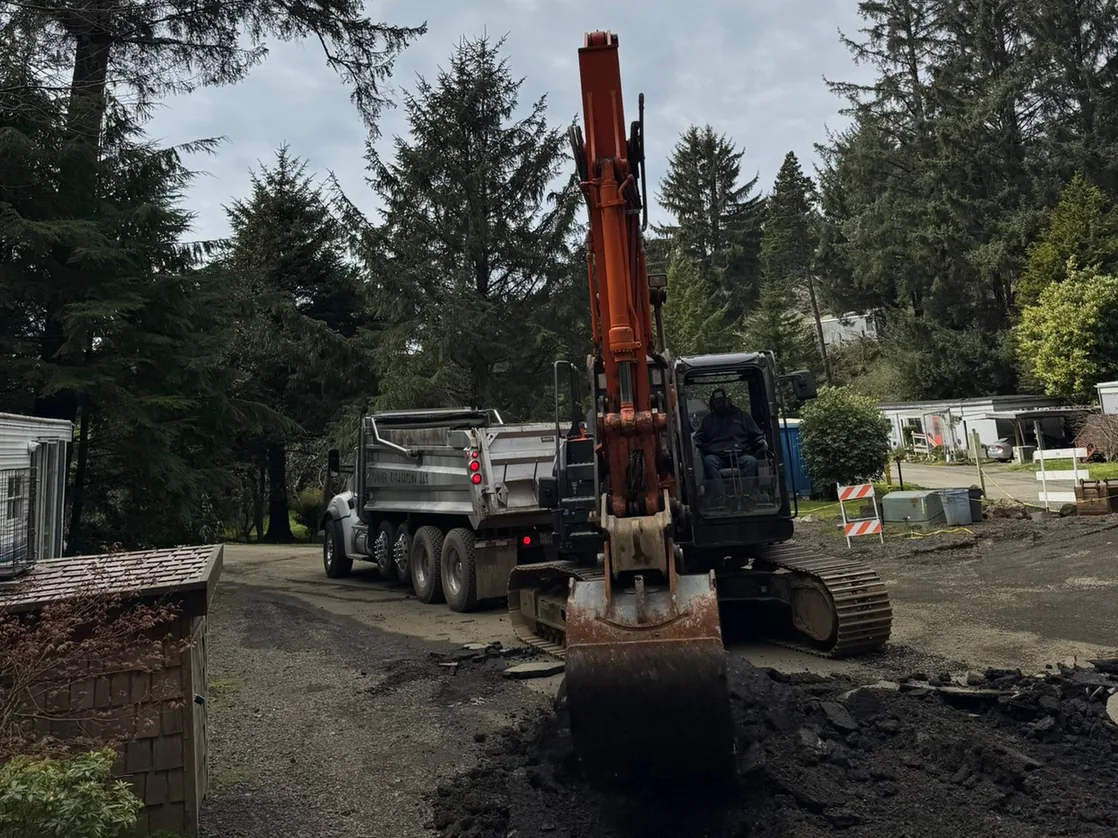
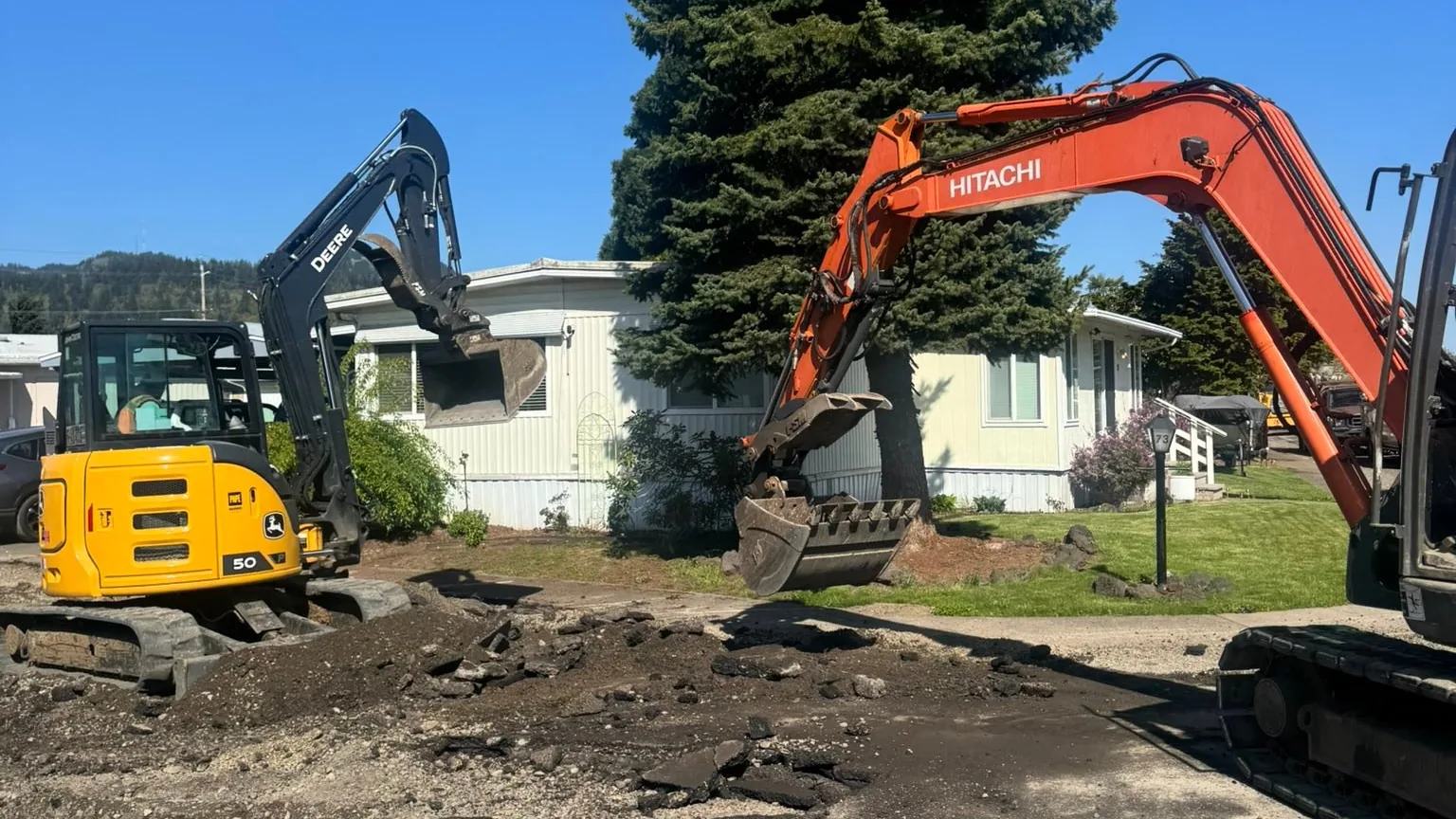
We take down old structures and break out the concrete and asphalt under them. Our dump trucks haul the debris off, and we grade the site for the next build.
Learn More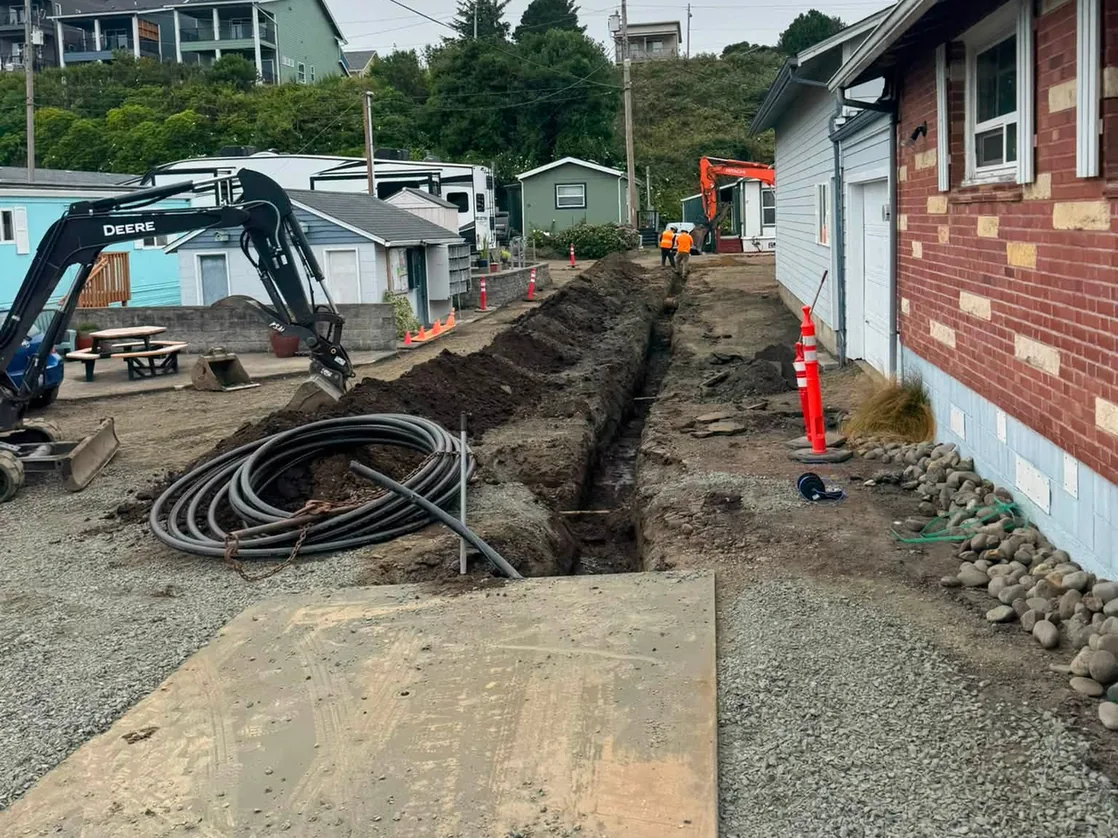
We install water mains, sanitary sewer, storm sewer and power and communications conduit for subdivisions and commercial sites. Each run goes from open trench to compacted backfill, ready for the inspector.
Learn MoreWe put in the water, sewer, storm and dry utilities, then build the street over them. Our paving and concrete subcontractors finish the curbs and asphalt under our management.
Our excavators, dozer, water truck and dump trucks do the heavy work. Our crew and foreman run the site from the first cut to final grade.
We look at the plans and the ground before we price the work. Then the free estimate comes to you in writing, with the scope spelled out.
Our shop and yard are in Dallas, in Polk County. We take on projects about 70 miles out, across the Willamette Valley and over the Coast Range to Newport.
Tell us where the land is and what the project needs, and send the plans if you have them. Call or text (503) 507-2919 or use the form, and we will set a time to look at the job.
Tell us about the project and where the site is. We look at the job and put a free estimate in writing.