Trenching
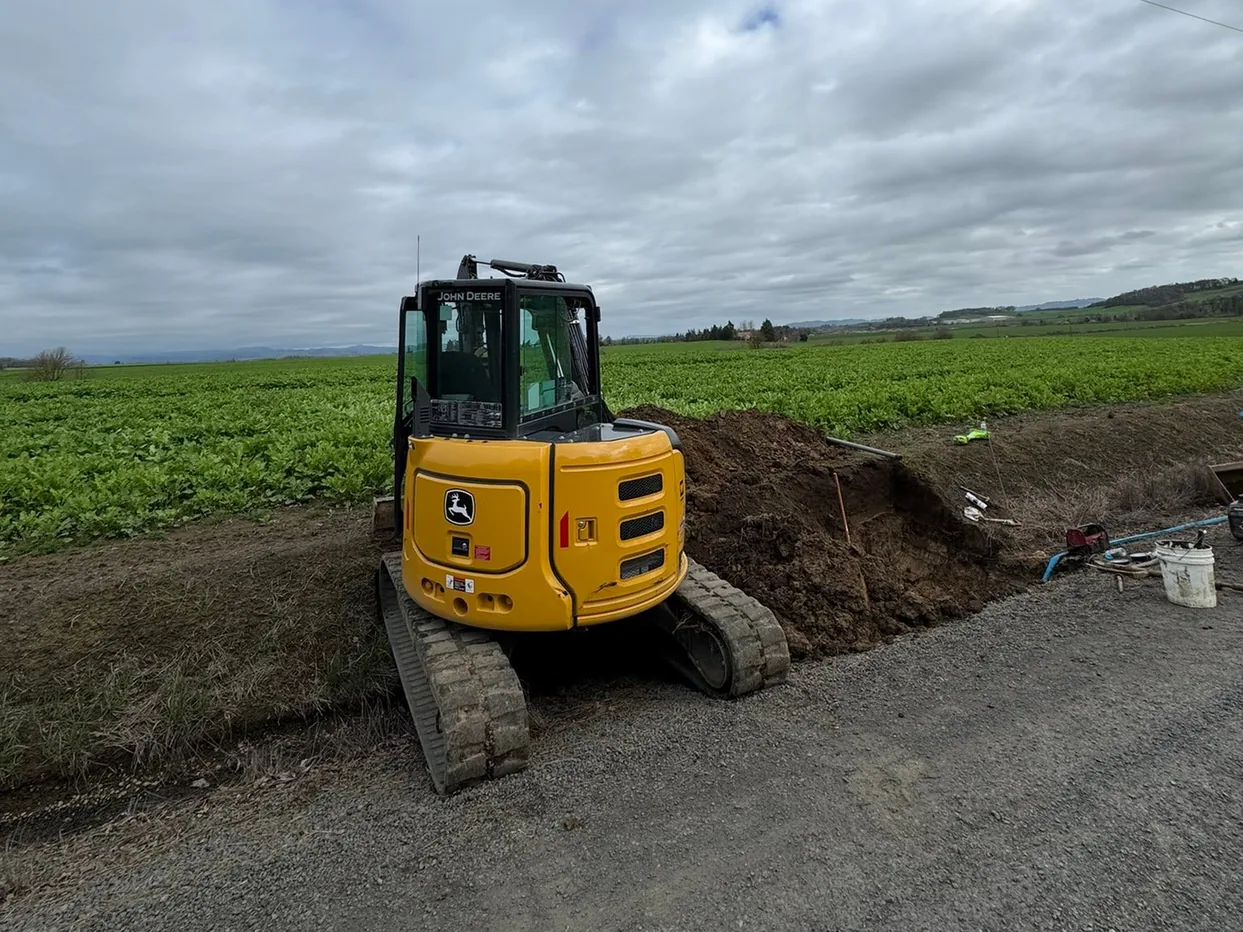
Trenching for water lines, power conduit and drain lines across acreage and commercial sites. Every run starts with an Oregon 811 locate request and ends in compacted backfill.
Learn More
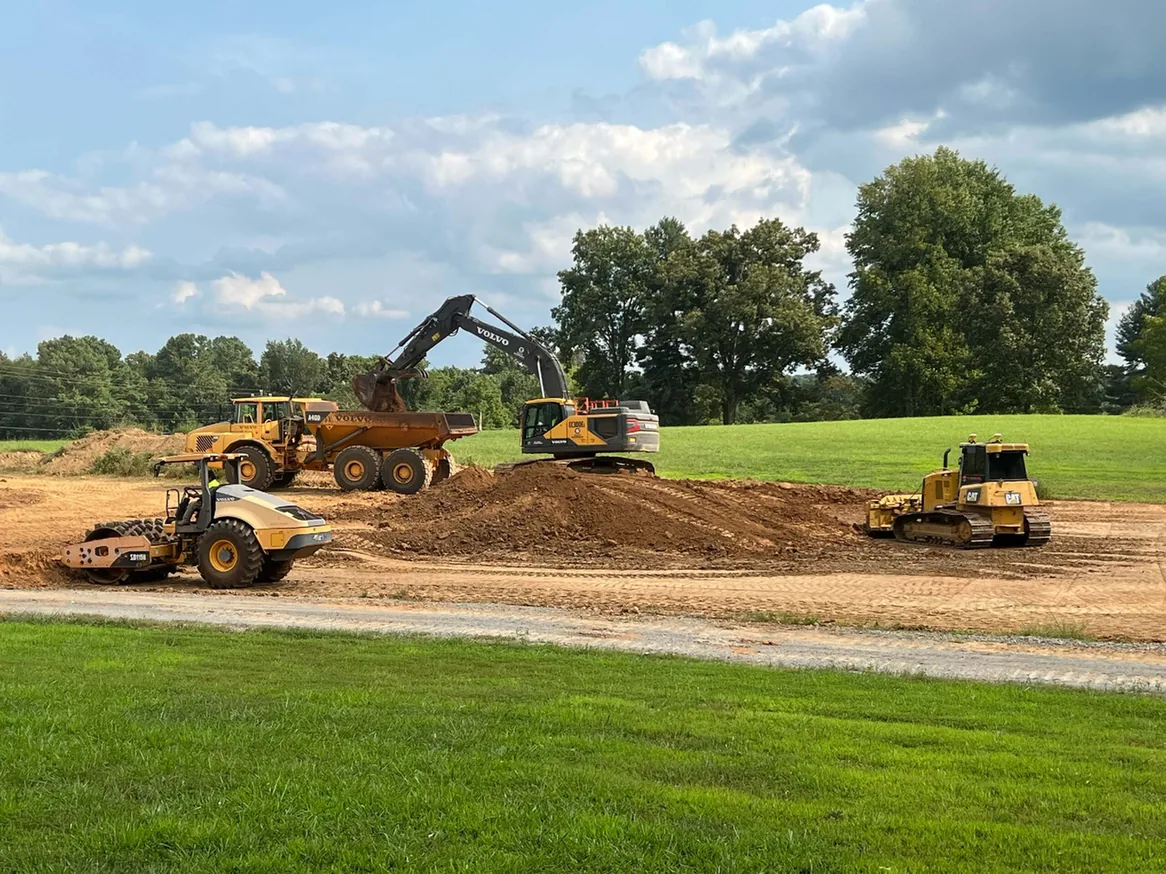
Grading and earthwork turn raw ground into the grades a project needs. The work covers mass excavation, cut and fill, structural fill and the finish grade on each lot and pad. Builders and developers hire us as their grading contractor for subdivision lots and commercial sites. Farms and nurseries call us to level growing areas and fields.
Earthwork is a core part of our work as an excavation contractor in Dallas, OR. We run our own excavators, a dozer, a water truck and dump trucks from our yard in Dallas. Our grading jobs reach across Polk and Marion Counties and the wider Willamette Valley. Call or text (503) 507-2919 for a free estimate in writing.
Tell us about the project and where the site is. We look at the job and put a free estimate in writing.
Earthwork on a development starts with the engineer's grading plan and the ground as it sits today. On a raw parcel, the brush and the topsoil come off first during site preparation and land clearing. Then we cut the high ground down to grade. That soil becomes fill in the low ground, placed in thin layers and compacted.
Mass grading is the first big earthwork step in subdivision development. It shapes the whole parcel before the streets and utilities go in. Once those are in, each lot gets its finish grade. Then the builders do their dig outs and build houses.
Building pads for commercial buildings and farm shops start with a firm subgrade. Soft spots get dug out and replaced with rock. Structural fill goes on next, compacted to the engineer's spec. With the pad at grade, foundation excavation can begin.
Rain sets the earthwork calendar in the Willamette Valley. The long-term weather station near Dallas averages about 48 inches of rain a year. More than 90 percent of it falls from October through May. July and August together average less than an inch.
Valley soils hold that water. The federal soil survey lists the silty Woodburn and Amity soils as extensive across the Willamette Valley. Their water tables are highest from December through March or April, and Amity is somewhat poorly drained. Wet silt and clay will not compact to the density a road or a pad needs.
So the big cut and fill work goes in the dry season when the schedule allows. In summer, our water truck adds moisture so the fill compacts and the dust stays down. Sites that disturb one acre or more need Oregon DEQ's 1200-C construction stormwater permit. Its erosion and sediment control plan must account for wet weather.
Nurseries and farms around Dallas and Salem need a lot of grading work. Growing areas need an even, steady slope so water runs off the beds. Fields get leveled to take out the low spots where water stands each winter. Equipment yards and farm building sites need firm, graded ground.
Drainage grading shapes the ground so surface water leaves the field or the yard. Where the water needs a pipe or a culvert, storm drainage carries it the rest of the way.
Farm use itself is exempt from DEQ's construction stormwater permit. The permit's own definition says that exemption does not cover farm buildings or their roads that disturb over an acre. Wetlands and streams fall under a separate state law. Moving over 50 cubic yards in most of them takes a removal-fill permit from the Oregon Department of State Lands.
Call or text for a written quote. We work about 70 miles around Dallas across the Willamette Valley.
(503) 507-2919From the first call or text to the finished work, here is how it goes.
Call or text (503) 507-2919 and tell us about the land and the project. Plans or a site map help if you have them.
We come out to look at the ground and where the water goes. If there are plans, we go through the quantities with you.
The free estimate comes to you in writing, with the scope of work spelled out. Once you say yes, we set the start date together.
We call Oregon 811 for utility locates before any digging. Then the work goes in the order the job needs, from clearing through base rock.
We work with the city or county inspectors as the utilities go in. We leave the site graded and ready for the builders or the next trade.
Common questions about grading and earthwork around Dallas and the rest of the Willamette Valley. If yours is not here, call or text and ask.
Trenching for water lines, power conduit and drain lines across acreage and commercial sites. Every run starts with an Oregon 811 locate request and ends in compacted backfill.
Learn More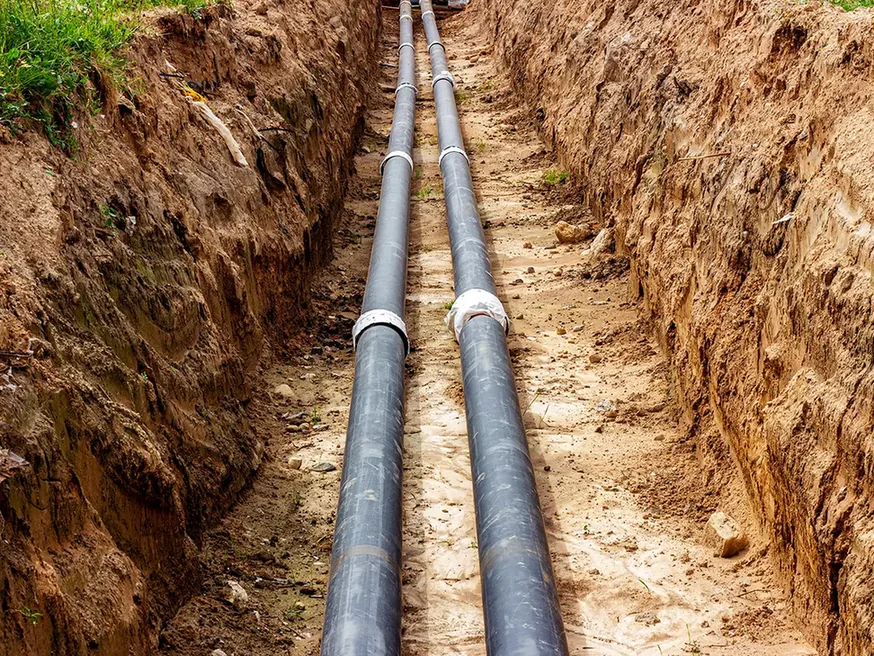
French drains, curtain drains, catch basins and culverts for building sites, subdivisions, farms and nurseries. We build each system on a steady fall to an outlet, to the engineer's plan where there is one.
Learn More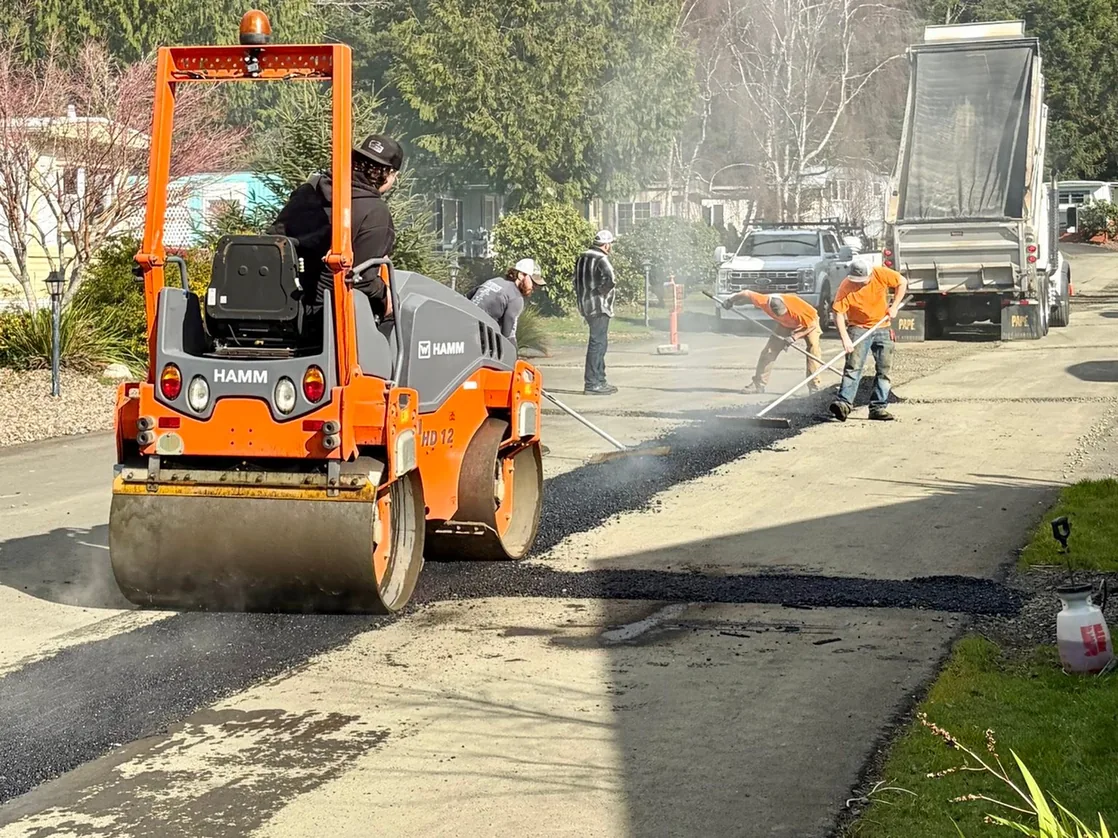
We build subdivision streets and private roads from the subgrade up, with the utilities under them laid first. Our concrete and paving subcontractors pour the curbs and lay the asphalt, under our management.
Learn MoreWe put in the water, sewer, storm and dry utilities, then build the street over them. Our paving and concrete subcontractors finish the curbs and asphalt under our management.
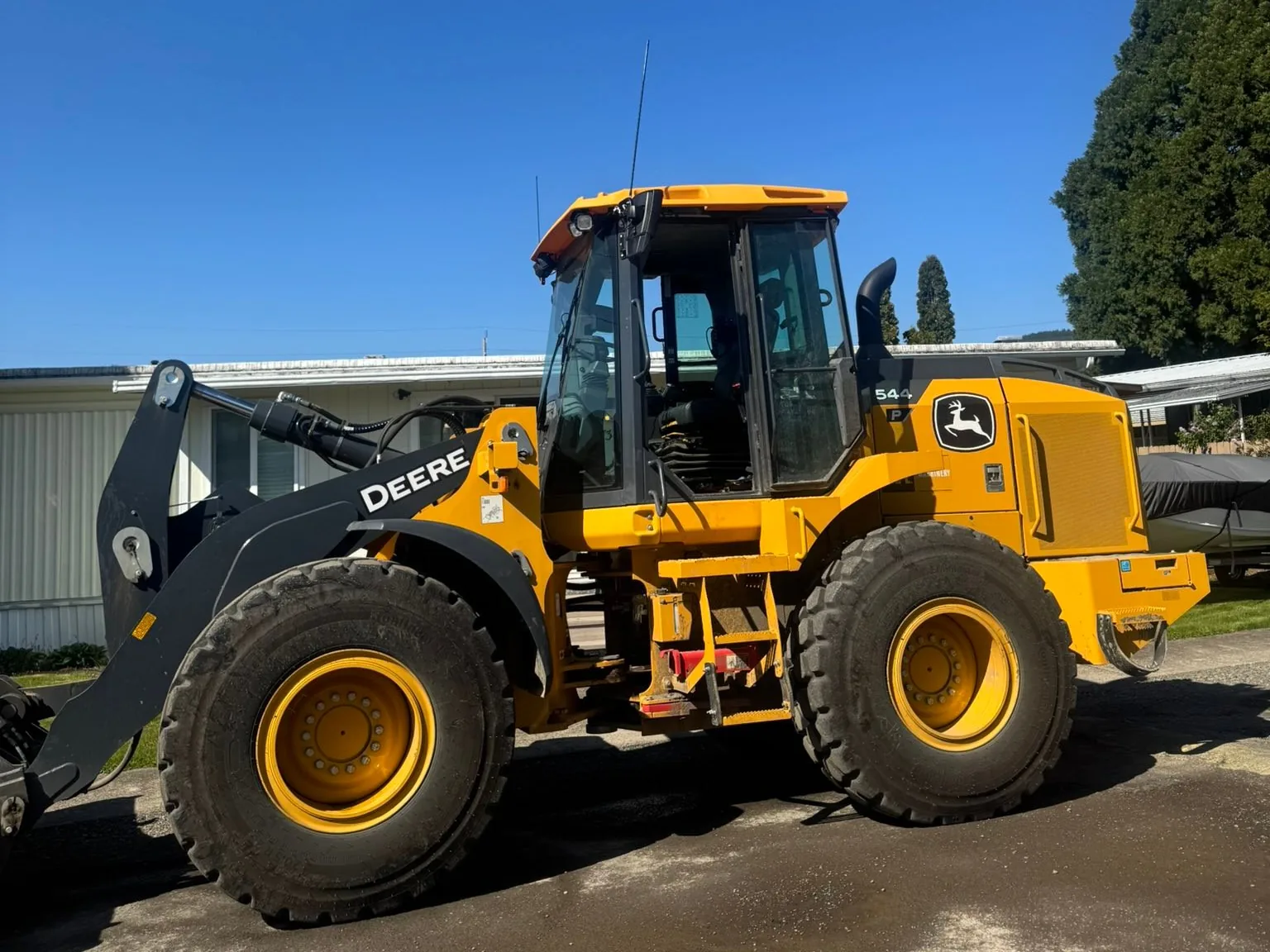
Our excavators, dozer, water truck and dump trucks do the heavy work. Our crew and foreman run the site from the first cut to final grade.
We look at the plans and the ground before we price the work. Then the free estimate comes to you in writing, with the scope spelled out.
Our shop and yard are in Dallas, in Polk County. We take on projects about 70 miles out, across the Willamette Valley and over the Coast Range to Newport.
Tell us where the land is and what the project needs, and send the plans if you have them. Call or text (503) 507-2919 or use the form, and we will set a time to look at the job.
Tell us about the project and where the site is. We look at the job and put a free estimate in writing.