
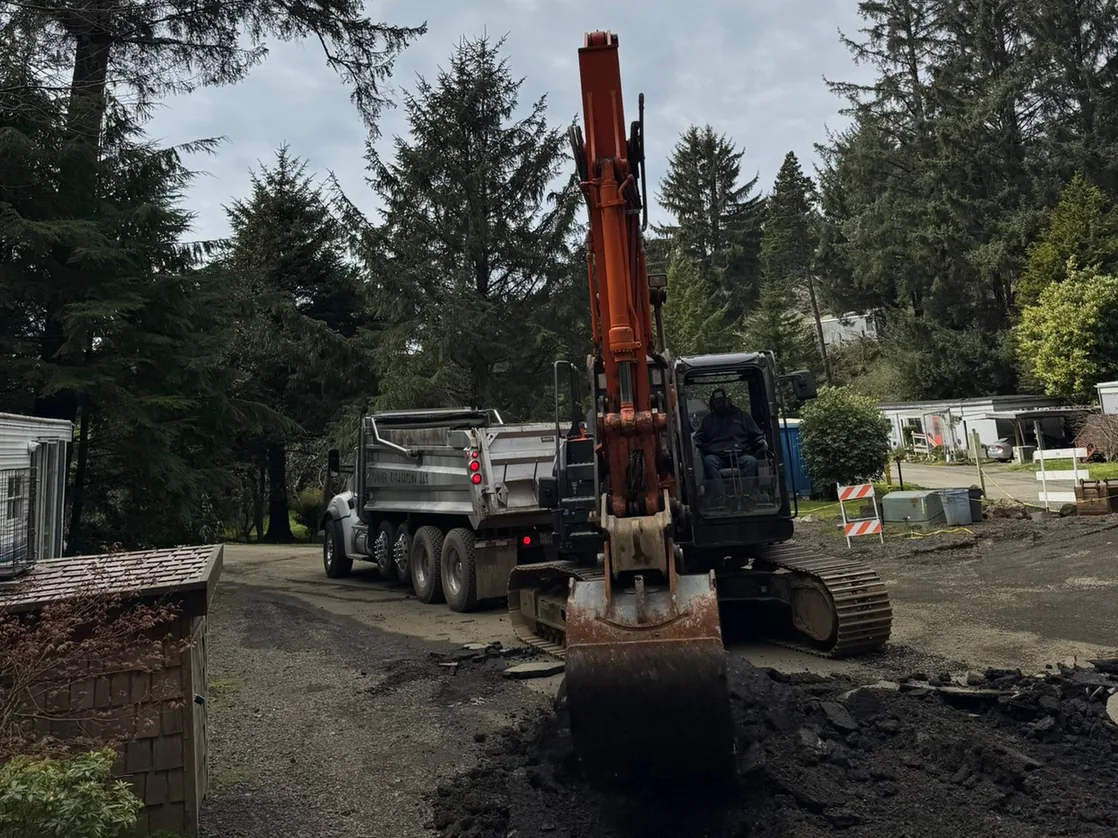
Demolition
We take down old structures and break out the concrete and asphalt under them. Our dump trucks haul the debris off, and we grade the site for the next build.
Learn More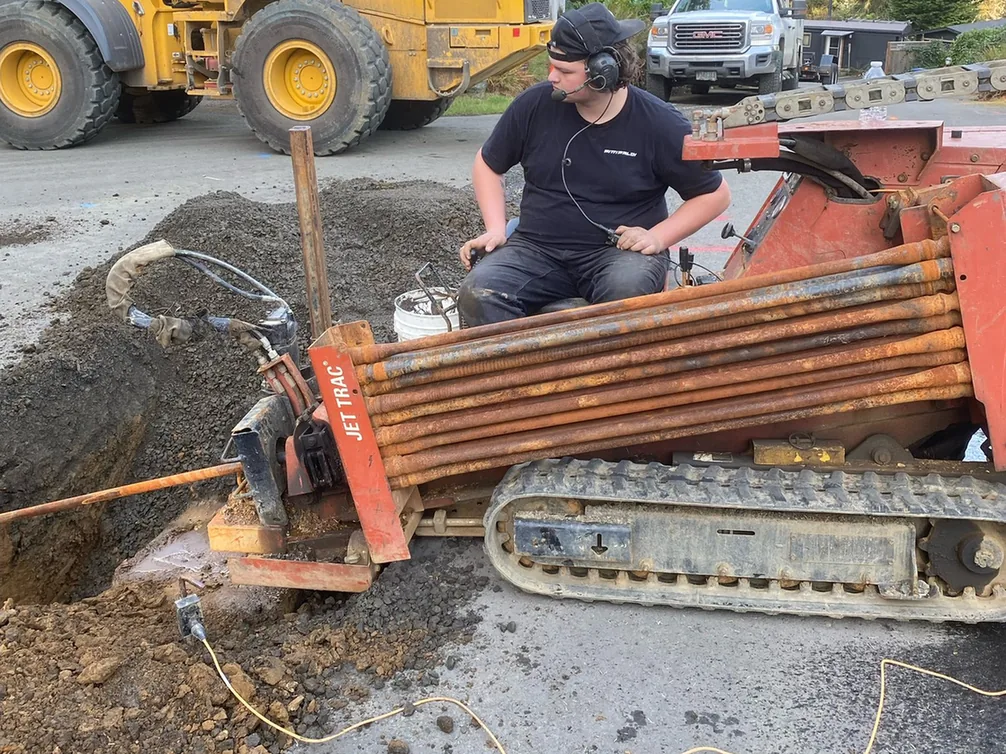
Turner Excavation provides directional drilling for builders, developers, farms, nurseries and business owners around Dallas, OR. A directional drill bores a path under a road, a paved drive, a parking lot or a creek. The water line or conduit then pulls back through that bore. The surface on top stays in place, and most of the digging happens at the two ends.
A bore is often one part of a bigger job, like the underground utilities for a subdivision. We bore for water services and for power and communications conduit. We have run a directional drilling job in Perrydale. As an excavation contractor in Dallas, Oregon, we work across Polk and Marion Counties and the wider Willamette Valley.
Tell us about the project and where the site is. We look at the job and put a free estimate in writing.
Horizontal directional drilling starts with a small pilot hole. The drill rig pushes a string of steel rod into the ground at a shallow angle. The driller steers the head under the obstacle and back up on the far side.
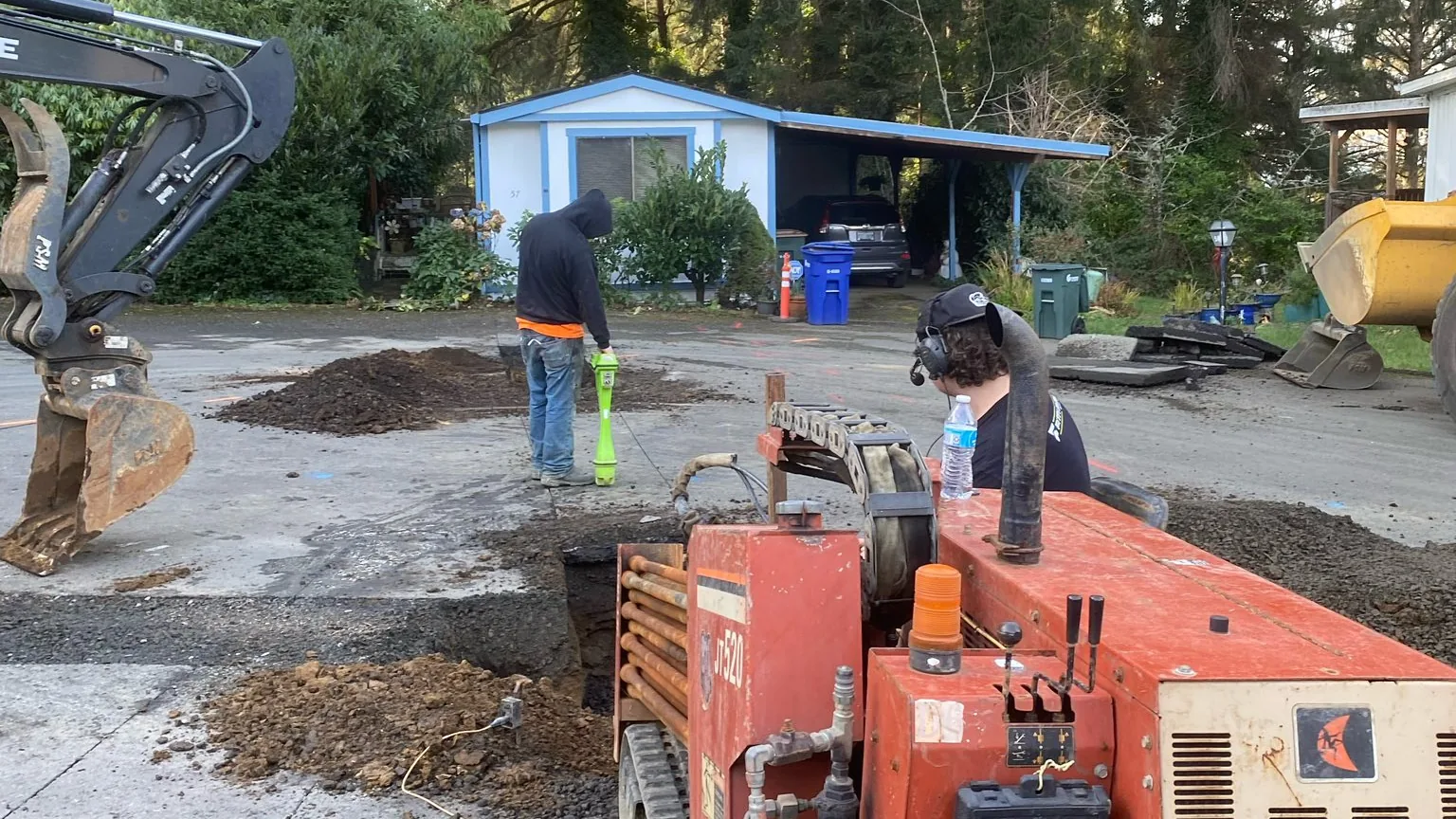
A walkover locator above ground tracks the drill head as it goes. It shows how deep the head is and which way it points. Drilling fluid, mostly water and bentonite clay, is pumped down the rod. It carries the cuttings out and helps hold the hole open.
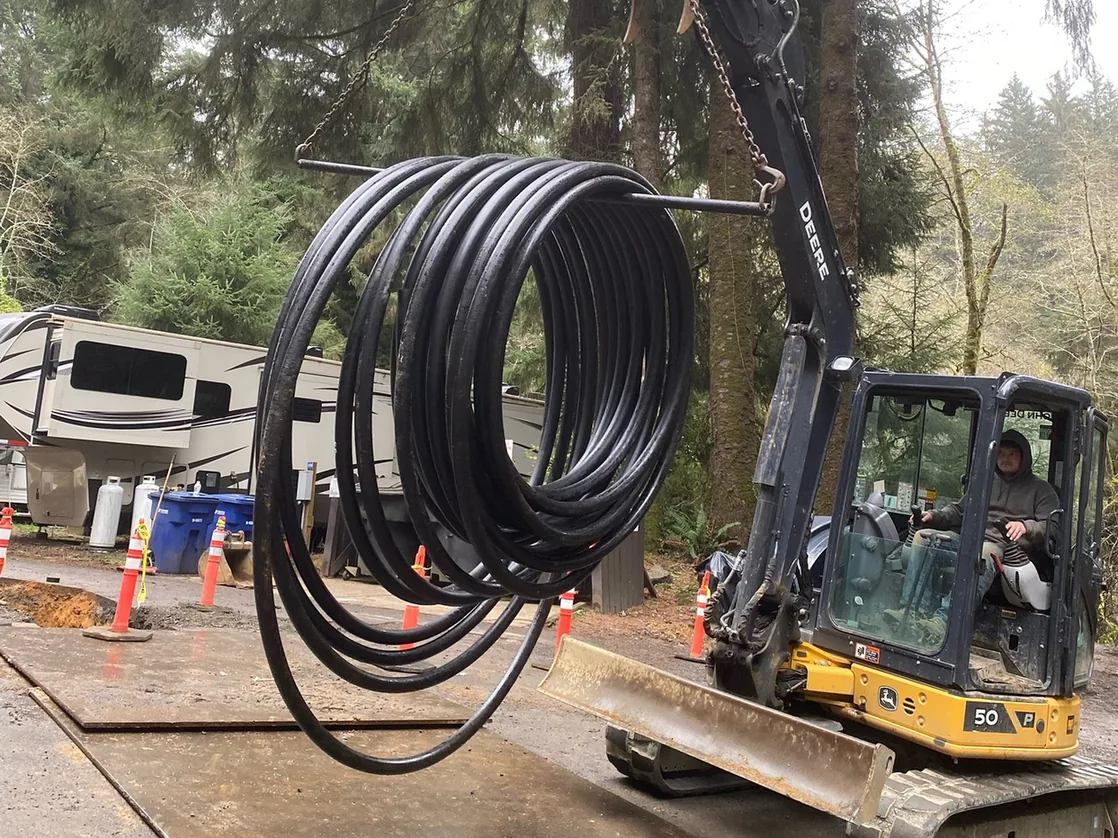
When the drill head comes up on the far side, a reamer goes on the rod. The rig pulls the reamer back through the pilot hole to open it wider than the pipe. The pipe or conduit hooks on behind the reamer and follows it through. Pits or tanks at the ends hold the drilling fluid that comes back.
A bore makes sense when the surface over the route needs to stay put. Under a road, traffic keeps moving and the pavement stays whole. On a built commercial site, a bore can carry new conduit under the parking lot. The rig needs little working room compared with other methods.
Creeks and wetlands are the other big reason. Oregon's removal-fill guide names directional boring as a lower-impact choice than trenching for utility lines. On farm and nursery ground, a bore can pass under a ditch or rows of growing stock. On winter-wet valley soil, a bore leaves far less open ground to turn to mud.
Across open ground with nothing to protect, an open trench is often the simpler choice. Rock and loose, gravelly ground can also rule out a bore. On a long crossing, the engineer may call for soil borings first. When both could work, we can quote both, since we offer trenching services as well.
Oregon's one-call rules treat a bore like any other dig. Each bore starts with an Oregon 811 locate request, made at least two full business days ahead. When a bore passes within 24 inches of a marked line, the rules call for finding its exact spot first. That means hand digging or another non-invasive method.
On farm and commercial ground, many lines between buildings are private. Private lines past the meter are not marked through Oregon 811. A private utility locator can find them before the drill goes in.
Under a public road, Oregon law calls for written permission first. That covers pipe and cable placed in a state highway or county road right of way. The Oregon Department of Transportation gives it for state highways, and the county gives it for county roads. Inside a city, the city's public works office answers that question for its streets.
Call or text for a written quote. We work about 70 miles around Dallas across the Willamette Valley.
(503) 507-2919From the first call or text to the finished work, here is how it goes.
Call or text (503) 507-2919 and tell us about the land and the project. Plans or a site map help if you have them.
We come out to look at the ground and where the water goes. If there are plans, we go through the quantities with you.
The free estimate comes to you in writing, with the scope of work spelled out. Once you say yes, we set the start date together.
We call Oregon 811 for utility locates before any digging. Then the work goes in the order the job needs, from clearing through base rock.
We work with the city or county inspectors as the utilities go in. We leave the site graded and ready for the builders or the next trade.
Common questions about directional drilling around Dallas and the rest of the Willamette Valley. If yours is not here, call or text and ask.
We take down old structures and break out the concrete and asphalt under them. Our dump trucks haul the debris off, and we grade the site for the next build.
Learn More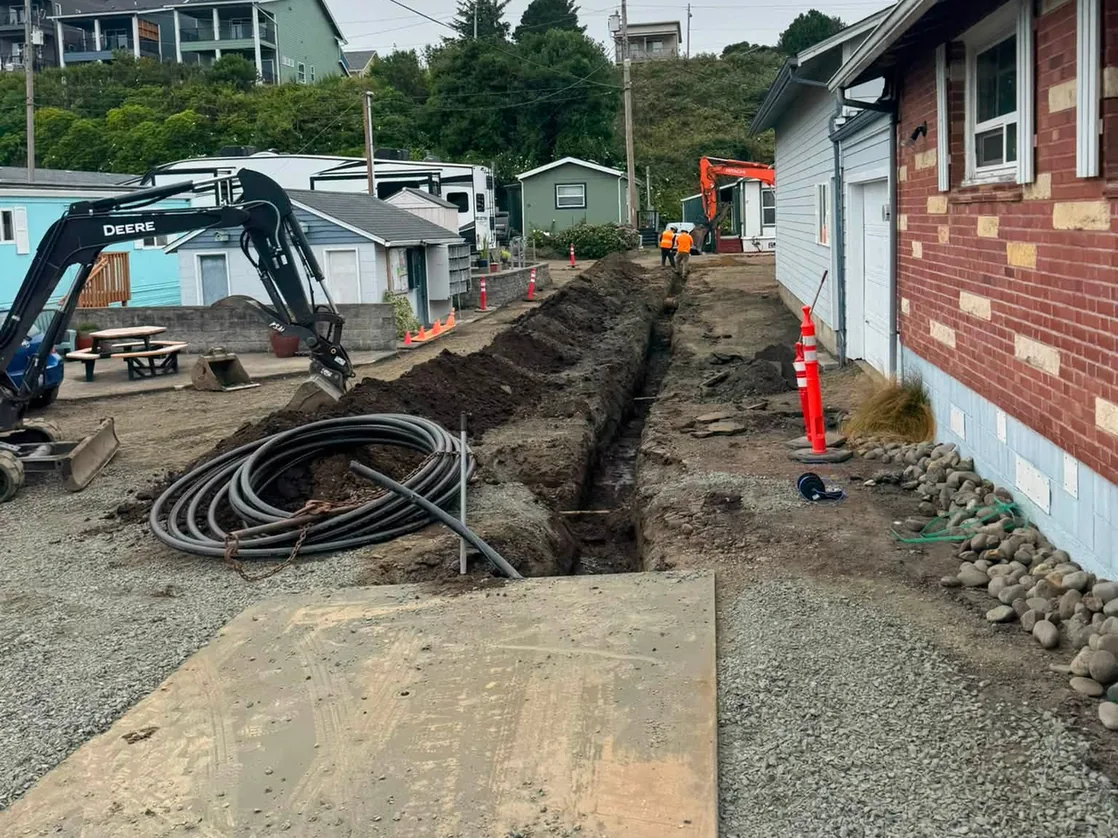
We install water mains, sanitary sewer, storm sewer and power and communications conduit for subdivisions and commercial sites. Each run goes from open trench to compacted backfill, ready for the inspector.
Learn More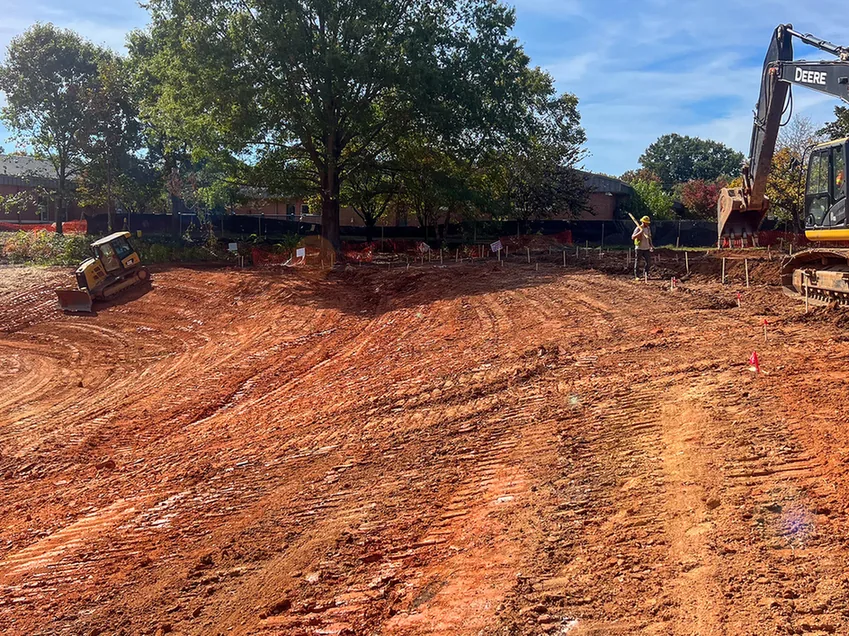
We turn raw land into finished, buildable lots for builders and developers. Every underground utility goes in before the streets, and each lot is left graded for its builder.
Learn MoreWe put in the water, sewer, storm and dry utilities, then build the street over them. Our paving and concrete subcontractors finish the curbs and asphalt under our management.
Our excavators, dozer, water truck and dump trucks do the heavy work. Our crew and foreman run the site from the first cut to final grade.
We look at the plans and the ground before we price the work. Then the free estimate comes to you in writing, with the scope spelled out.
Our shop and yard are in Dallas, in Polk County. We take on projects about 70 miles out, across the Willamette Valley and over the Coast Range to Newport.
When does directional drilling beat an open trench in Oregon? Road and creek crossings, market costs per foot, the limits of each and restoration.
Read more →
What underground utility installation costs in Oregon per foot, from national cost guides and Oregon city plans, and the factors that move the price.
Read more →Tell us where the land is and what the project needs, and send the plans if you have them. Call or text (503) 507-2919 or use the form, and we will set a time to look at the job.
Tell us about the project and where the site is. We look at the job and put a free estimate in writing.